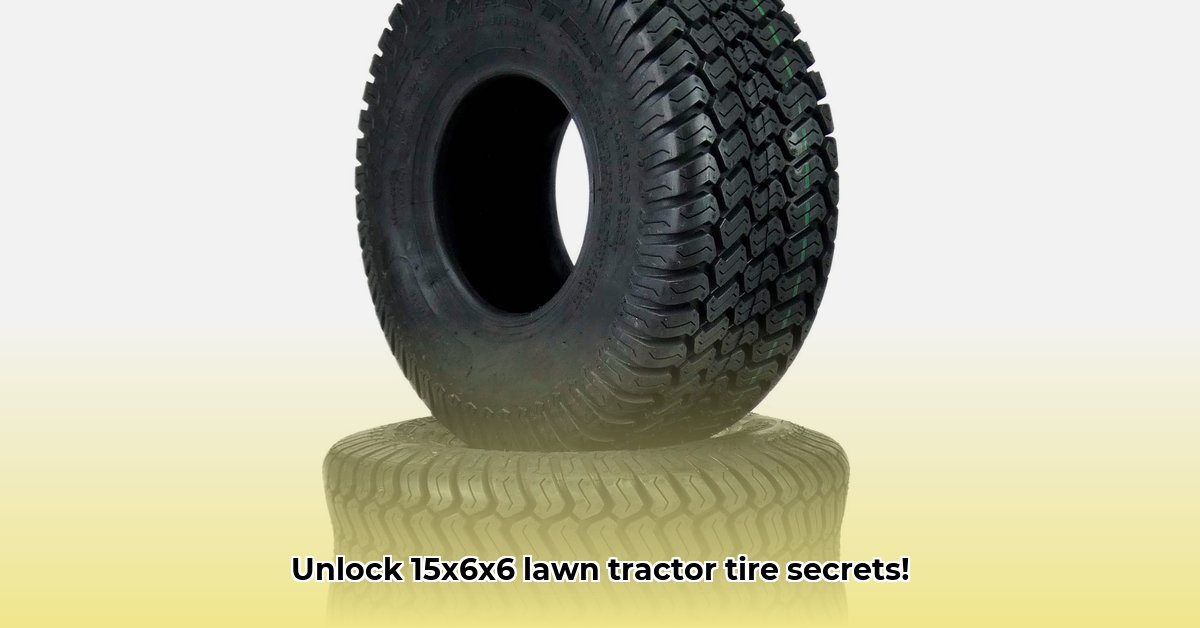
Sustainable agriculture hinges on efficiency and minimizing environmental impact. A seemingly small component, the tires on your equipment, play a surprisingly significant role. This guide focuses on the ubiquitous 15x6x6 lawn tractor tire (or its equivalent for larger agricultural machinery), demonstrating how proper selection, maintenance, and responsible disposal contribute to a more sustainable farming operation. We'll explore technical specifications, performance characteristics, maintenance strategies, environmental considerations, and comparisons with alternative tire options. For more on lawn tractor equipment, check out this helpful resource.
Decoding the 15x6x6: Understanding Tire Specifications
The designation "15x6x6" provides crucial information about the tire's dimensions. The "15" represents the diameter in inches, the first "6" indicates the width in inches, and the second "6" denotes the rim diameter in inches. This standard size is commonly used on smaller tractors and implements, but the principles discussed here apply to various sizes found in agricultural applications. Understanding these dimensions is the first step in selecting the right tire for your needs.
Beyond the numerical code, the tire's construction is paramount. Most 15x6x6 tires employ a bias-ply construction (layers of fabric running diagonally), creating a robust and durable tire. The tread pattern – the design of the grooves on the tire's surface – profoundly impacts traction and performance across different soil types. A deeper, more aggressive tread is beneficial in muddy conditions, while a shallower pattern might suffice on well-maintained ground. The tire’s load capacity, specified by the manufacturer, determines the maximum weight it can safely support.
Performance and Impact on Soil Health
Tire pressure is a critical factor affecting both performance and soil health. Proper inflation ensures optimal traction, minimizing soil compaction and fuel consumption. Under-inflation leads to excessive soil compaction, damaging soil structure and hindering water infiltration – a detrimental effect on plant growth and overall soil health. Over-inflation, conversely, can strain the tire, leading to premature wear and potential blowouts. Adhering to the manufacturer's recommended pressure (PSI) is essential.
Dr. Emily Carter, Agricultural Engineer at the University of California, Davis, highlights the significance of this balance: "Maintaining correct tire pressure is paramount. It directly impacts fuel efficiency, reduces soil compaction, and extends tire lifespan, ultimately contributing to a more sustainable operation."
Studies consistently demonstrate a strong correlation between tire pressure, soil compaction, and crop yields. Lower tire pressures, while improving traction in some soils, can significantly increase compaction, leading to reduced yields. The optimal pressure is highly dependent on the soil type and the weight of the equipment. This relationship underscores the importance of site-specific management practices.
Maintenance and Longevity: Maximizing Tire Lifespan
Proactive maintenance significantly extends tire lifespan, reducing waste and saving costs. Consider these actionable steps:
Regular Inspections: Conduct a thorough visual inspection of your tires before each use. Look for cuts, punctures, embedded objects, or any signs of unusual wear. Early detection prevents minor problems from escalating into major repairs.
Pressure Monitoring: Use a reliable pressure gauge to check tire pressure regularly. Adjust pressure as needed to match the manufacturer's recommendations. This simple act drastically impacts tire life and minimizes soil compaction.
Tire Rotation: Rotate tires periodically to ensure even wear distribution. This simple practice can prolong tire life by several months or even years.
Proper Storage: During periods of inactivity, store tires in a cool, dry environment. Avoid direct sunlight and extreme temperatures, which can damage the rubber and reduce tire lifespan.
Professional Repairs: Minor punctures can often be professionally repaired. However, significant damage necessitates replacement. Consult a tire specialist for guidance on repairs and replacements.
Environmental Impact and Sustainable Disposal
The environmental impact of tires extends across their entire lifecycle. Tire manufacturing consumes resources and generates emissions. During operation, tires can contribute to soil compaction and erosion. Responsible disposal is paramount. Investigate local recycling programs designed to repurpose or recycle used tires, reducing landfill waste and environmental impact. Research into bio-based tire materials offers promising pathways toward more sustainable practices.
Alternatives and Future Trends
While the 15x6x6 tire is suitable for many applications, alternative tires offer advantages depending on specific needs. Larger tires provide better flotation on soft soils, reducing compaction. Tires with different tread patterns offer varying traction capabilities, optimizing performance in wet or dry environments.
The agricultural tire landscape is dynamic. Innovation continues to focus on improved durability, reduced compaction, and enhanced traction. Research into bio-based materials and innovative tread designs promises further environmental gains in the future.
Conclusion: Integrating Sustainable Practices
Sustainable agriculture demands a holistic approach, considering every element of the farming process. Tires might seem like a minor detail, but their impact on efficiency, soil health, and the environment is substantial. By prioritizing proper tire selection, meticulous maintenance, and responsible disposal, farmers directly contribute to a more sustainable agricultural landscape. Choosing durable tires, mastering maintenance protocols, and recycling responsibly are key tenets of effective sustainable agricultural practices. By implementing these strategies, you can not only optimize your equipment's performance but also enhance the ecological integrity of your farm for years to come.